
Addendum: Here is a table of Surahs of the Qur’an in Chronological Order
I would like to note that some of you may have noticed that I often blog James R. White’s apologetic materials here once in a while. The reason I do so is for two reasons: First, he is considered one of the foremost Evangelical Christian apologists in our today. And second, there is no one overall doing better work in these three apologetic areas: Islam, Roman Catholicism, and Mormonism. So you are being exposed to getting the best of the best responses to objections of Christian claims.

The term “parousia” is the Greek term behind many of the references to the Coming of Christ in our English Bibles. It is one of the most important terms in eschatology. It is a rich term and has nuance depending how an author used it. Charles Cooper devoted a chapter to its usage in his most recent book, God’s Elect and the Great Tribulation.
And I would like to refer you to the inaugural issue of the Parousia Newsletter titled “What’s in a Name?” which discusses this all-important term. You can download the backissue here. To be able to read the newsletter you need the Adobe Reader which you can download here if you do not already have it.
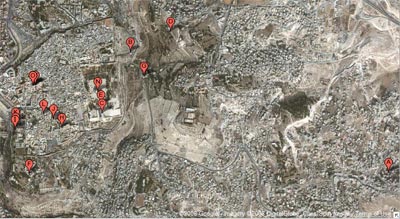
This google map and google earth feature of the events leading up to the crucifixion will give you a fuller view of the locations along with descriptions of each event. HT: JT
There are many today who believe they are pious for doubting that God has spoken with clarity on the Return of his Son. They are called Panmillennialists (i.e. “we cannot know…it will all pan out in the end.”)
But Jesus teaches in Matthew 24 that this attitude of panmillennialism is sinful, and exhorts us not to have doubt but knowledge, “even so, when you see all these things, you know that it is near, right at the door.”
Charles Spurgeon’s words here on doubters applies to those post-moderns who call themselves evangelicals and sadly extol doubt as a virtue and certainty as a vice. May God turn their hearts back to the plain and clear words of our Lord.